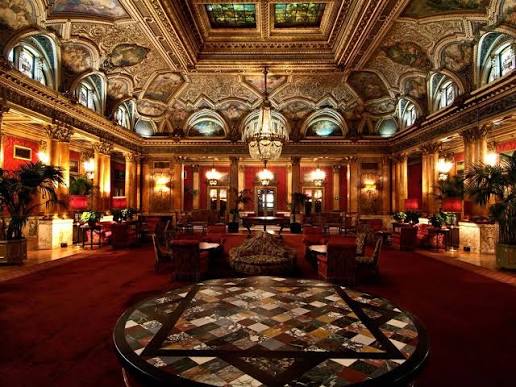
One basic mistake continues to recur in the hotel sector: confusing the value of the real estate with the value of the business that operates it. The Grand Hotel Plaza in Rome, at 126 Via del Corso, is one of the most emblematic cases in Italy because it makes that disconnect visible with almost textbook clarity. From a property standpoint, the Plaza remains a one-of-a-kind asset: a prime address, historic pedigree, absolute centrality and international recognisability.
The point, however, is that a great hotel does not create value simply because it is beautiful, historic or exceptionally well located. It creates value when it is able to convert those attributes into profitability, financial stability, reinvestment capacity and institutional credibility. When that conversion mechanism breaks down, even an exceptional property ceases to function as a platform for growth and instead becomes a repository of financial, operational and corporate tension. That is precisely why the Plaza case matters to those who truly understand hotel investment.
According to Open’s investigation of 2 November 2025, the 2024 operating accounts point to a level of deterioration that cannot be dismissed as a simple cyclical setback: revenues fell from €9.766 million to €6.031 million, operating losses reached €3.705 million, and total liabilities stood at around €40 million, of which €30.757 million was owed to the Italian tax authorities. At the same time, the property-owning company revalued the asset at €245.5 million, with €49.1 million attributed to the land alone. It is the perfect paradox: the real estate holds its value while the operating platform weakens.
That is the real key to the case: the Plaza is not a weak asset; it is a strong asset within a weak structure. And that distinction is decisive. When a hotel of this quality comes under pressure, the problem is rarely the building itself. More often, the problem lies in the way ownership, operations, debt, tax exposure, governance and execution discipline are combined. In other words, what we are witnessing is not the erosion of a building’s intrinsic value, but the loss of efficiency of an entire model.
The first misconception that needs to be removed concerns the Roman market itself. Rome does not explain the Plaza’s fragility. On the contrary, the data points in the opposite direction. Turismo Roma confirmed that 2025 was a record year for the capital, with 22.9 million arrivals and 52.92 million overnight stays. In parallel, HVS reports that Rome’s hotel market maintained occupancy consistently above 70% in 2024, with real room rates roughly 30% above 2019 levels, and that new development is concentrating precisely in the luxury segment. In other words, the Plaza is not weakening in a weak market, but in a strong one. That makes the diagnosis even more severe.
The point at which value truly begins to dissipate is the relationship between real estate ownership and hotel operations. Open reports that the rent charged for the use of the property rose from €2 million to €4 million, while operating revenues fell to just under €6 million. For an urban luxury hotel, a cost burden of that magnitude is not a simple accounting anomaly; it is a sign of structural imbalance. If the ownership vehicle absorbs too large a share of the value generated by the operating business, the PropCo may protect itself in the short term, but the OpCo is deprived of oxygen, capital strength and investment capacity. That is the point at which the separation between real estate and operations, if poorly calibrated, stops being a solution and becomes part of the problem.
This point deserves to be stated plainly: the separation between ownership and management is not inherently flawed; in mature markets it is often the most efficient model. It becomes destructive, however, when real estate income is protected at the expense of the operating business’s sustainability. At that stage, the owner is not preserving value; it is merely transferring instability onto the operator, thereby eroding the operating quality of the asset as a whole. And once a hotel loses operating quality, it also begins, over time, to lose its appeal to investors, lenders, brands and qualified partners.
There is then a second layer, arguably even more important: competition. Rome is no longer a market in which a major historic hotel can survive on reputation alone. HVS points to a pipeline of roughly 1,500 additional rooms over the coming years and identifies, among the key openings and developments, Ruby Hotel Rome, Rosewood Rome and Brach Roma. This means that Roman luxury hospitality is increasingly being shaped by operators with international distribution, operating standards, revenue management systems, loyalty platforms, procurement power and the capacity to absorb capital expenditure. In such an environment, an independent hotel can certainly remain competitive, but only if it has governance and an operating model capable of matching the new landscape. Heritage alone is no longer enough.
The third front concerns the overall bankability and investment readability of the case. Open reports litigation of around €10.06 million involving Shawn John Shadow, material tax exposure and the existence of a mortgage in favour of the Italian tax collection agency. In February 2026, Italia a Tavola, citing market reports and reconstructions concerning the group, referred to a reorganisation process, possible mergers and liquidations, as well as the prospect of opening the door to international funds or strategic partners. On 2 April 2026, Open further reported the decision to wind up the holding company Agricola Monastero Santo Stefano Vecchio, controlled by Olivia and Cristiana Paladino, with cumulative losses exceeding €16 million, according to the minutes cited by the publication. Taken together, these elements do not in themselves prove that a transaction is imminent, but they clearly indicate mounting pressure towards a restructuring of the asset and its corporate perimeter.
From an advisory standpoint, the issue is not to comment on corporate headlines. The issue is to understand what the market is saying. And the market is saying something very simple: the Plaza needs to be fundamentally reframed. No longer as a historic grand hotel under integrated owner-management, but as a prime asset requiring structural realignment through a transparent separation between real estate value and operating performance. In international terms, this means moving towards a credible PropCo / OpCo structure: a financially sound, transparent and bankable ownership vehicle on one side, and an operating platform entrusted to — or structured around — industrial, commercial and brand-led logic on the other.
This is where the Plaza case stops being a Roman story and becomes an Italian lesson. Many historic hotels in this country are not struggling because their real estate is worth less. They are struggling because their model of integration between family ownership, corporate structure, property income and hotel operations is no longer aligned with the complexity of the contemporary market. As long as competition was less intense, that inefficiency could remain hidden. Today, in a market where capital is more selective, international brands are advancing and operating performance is being scrutinised with growing discipline, that same inefficiency is becoming impossible to ignore.
The final lesson is straightforward. A great historic hotel does not lose value because it ceases to be prestigious. It loses value when its governance model ceases to be sustainable. The Plaza shows that owning an extraordinary property is not enough. The asset must be embedded in a capital, governance and operating structure capable of converting potential real estate rent into actual economic value. When that does not happen, the market does not punish the beauty of the asset; it punishes the inefficiency of the system that governs it.
Roberto Necci
Visit the website: https://www.hotelmanagementgroup.it
Need assistance with a hotel deal in Italy? r.necci@robertonecci.it